Conference Theme & Team
2027 Conference Theme Statement
An Invitation to the International Leadership Association (ILA) Global Conference
27-30 October 2027 | San Diego, California, USA
Dear Colleagues, Friends, and Members of the Global Leadership Community,
We live in a world of differences. Different cultures, languages, identities, experiences and histories, political ideas, and the futures we imagine. Difference itself is not something new. However, what is increasingly urgent within the current context of globalization, interconnection, and interdependency is our capacity to live, work, and build communities together across those differences acknowledging the dignity inherent to each human being.
Around the world, social polarization is transforming disagreement into distrust. National, racial, gender, class, and ideological categories can become boundaries separating “us” from “them” and dehumanizing the other. At the same time, artificial intelligence is rapidly transforming how we communicate, learn, create, make decisions, and relate to each other. AI offers extraordinary possibilities, but as machines become increasingly capable, it is critical to ask, “What remains distinctly human about leadership?”
These challenges inspire the theme of our 2027 International Leadership Association (ILA) Global Conference in San Diego, California, USA:
Building Community Around Differences: Leadership Work, Shared Humanity, and the Global Context.
Today, one of the most important leadership questions is: How can leadership help us recognize the human being behind the difference in building communities together? Importantly, building community does not require homogeneity, abandoning our convictions, treating all viewpoints as equally legitimate, or overlooking inequalities, injustice, and differences in power. Instead, leadership around differences requires engaging in disagreement while remaining attentive to the ethical and social consequences of our actions and beliefs. In other words, a more human(e) leadership begins by recognizing dignity even in disagreement. It requires empathy that is courageous enough to challenge and human enough to connect.
San Diego–Tijuana: A Living Laboratory of Difference and Connection
There could hardly be a more appropriate setting for these conversations than San Diego as we cannot fully understand San Diego without Tijuana and the binational region of CaliBaja. An international border separates the United States and Mexico. Yet every day, life crosses that border: Families, workers, students, ideas, knowledge, culture, art, products, technologies, or investments.
The CaliBaja region demonstrates how economic development, innovation, talent, education, and entrepreneurship increasingly depend upon cooperation across national boundaries. For example, in 2024, San Diego and Tijuana became the first binational region designated a World Design Capital, celebrating a relationship built around creativity, human-centered design, and cross-border collaboration.
This makes our conference location more than a backdrop. San Diego–Tijuana becomes part of our theme. The border reminds us that differences are real. Political boundaries matter. History matters. Culture matters. But connection and shared humanity are also central.
An Invitation to Build Community
The ILA is itself a community of differences. We come from different countries, cultures, disciplines, sectors, professions, theoretical traditions, and understandings of leadership.
Our ambition at the ILA Global Conference in San Diego 2027 is to nurture a community capable of meaningful disagreement. A space where difference produces curiosity rather than contempt, and where scholars learn from practitioners and practitioners are challenged by scholars. A place where technology meets the humanities, and where we can hold strong convictions while acknowledging the dignity of the other and remaining willing to listen.
We invite you to San Diego not simply to talk about leadership, but to have a deep dialogue around how to unfold a leadership work that is profoundly human. Bring your research, your experience, your questions, and your convictions. Bring perspectives that challenge us and come prepared to speak (and equally prepared to listen). More than a thousand of us will gather from around the world. For a few days, we will become our own global community built around differences. The challenge before us is not simply whether leadership can mobilize people who already agree. It is whether the work of leadership can help human beings create relationships, communities, institutions, and futures with people who do not.
In San Diego, at the heart of an extraordinary binational region, let us explore that possibility together. And let us build community — not by becoming the same — but by learning how to remain human together around our differences.
With warm regards,
Antonio Jiménez-Luque
Conference Chair
Nicole Ferry
Conference Program Chair
Meet Our 2027 Conference Team
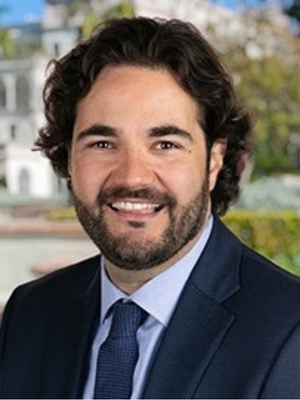
Antonio Jiménez Luque
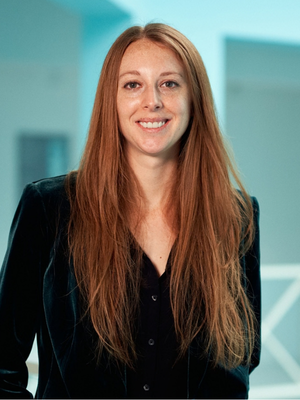
Nicole Ferry
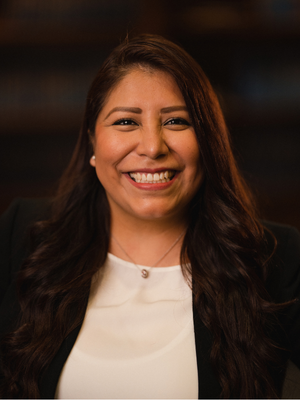
Dulce Elizabeth Caldino DeNovellis
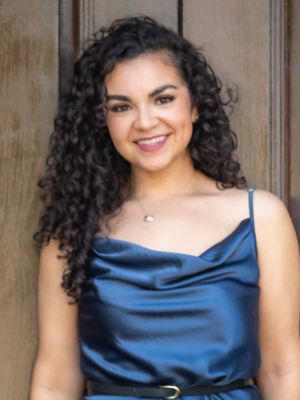
Nadeaja Shaheed
Lynn Levis
John Weng
Dr. Antonio Jiménez-Luque’s work, broadly speaking, explores how cultural, social, and historical perspectives influence conceptualizations and practice of leadership understood as a relational process of mobilization, emancipation, and social change. At the intersection of critical theory and intercultural studies, his research topics are (1) organizational culture and change; (2) leadership, framing and rhetoric; 3) participatory and relational leadership; and (3) intercultural and global leadership.
From 2004-2013, Dr. Jiménez-Luque was the Coordinator for the International Cooperation for Development at the University of Barcelona Solidarity Foundation (FSUB-UB). He designed and implemented projects on topics related to human development, peacebuilding, human rights, and interculturality with local governments, universities, grassroots organizations, and social movements in Algeria, DR Congo, Vietnam, Colombia, and Bolivia, among other countries.
In 2014, Dr. Jiménez-Luque moved to the United States for pursuing his doctoral studies at Gonzaga University where he worked for the Associate Vice-President for Equity, Diversity, and Inclusion as Intercultural Research Associate, and taught a variety of classes including Leading Across Cultures, Democracy and Human Rights, and Latin American Politics. Since 2018 he is teaching at the University of San Diego (USD) courses related to leadership studies such as theories of leadership, critical perspectives of leadership, global leadership, or organizational theory. Besides, Dr. Jiménez-Luque is the academic director of the concurrent degree Master in Leadership Studies between USD and CETYS Universidad in Mexico and the program chair for the Master’s programs of leadership studies in his department.
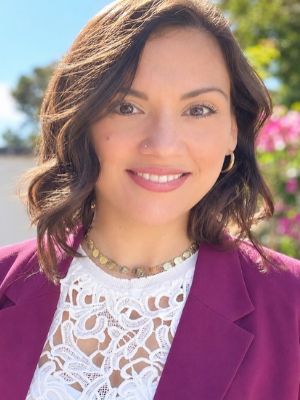
Nicole Ferry is a tenure-track assistant professor at Copenhagen Business School. Drawing on her background in cultural studies and critical theory, her research examines the ideological and gendered discourses of leadership and leadership development across diverse contexts. She has published in the Journal of Business Ethics, Leadership, Management Learning, Gender, Work and Organization, and Academy of Management Learning & Education. Her current work explores the competitive and cultural dynamics of the leadership industries, as well as contemporary approaches to gender-based leadership development.
Dulce E. Caldino DeNovellis, MBA, is a bilingual leadership scholar-practitioner rooted in the San Diego–Tijuana borderlands. She spent nearly sixteen years in leadership at CETYS Universidad in Mexico, rising from marketing and strategic programs to Director of Institutional Advancement, leading philanthropy, alumni engagement, and cross-border partnerships. Now at the University of San Diego’s School of Leadership and Education Sciences, she advances strategic, equity-focused initiatives as Executive Assistant to the Dean while completing her doctorate. Grounded in Chicana/Latina feminist epistemologies, her research examines how transnational immigrant Latina leaders draw on cultural, relational, spiritual, and embodied ways of knowing to enact leadership and resilience collectively. She presents this work nationally and internationally.
Nadeaja Shaheed, MA, is an ICF-certified Leadership Coach, educator, nonprofit consultant, and doctoral scholar in Organizational Leadership at the University of San Diego. Her work explores culturally responsive mentorship, leadership identity development, and the experiences of womxn of color within PWI’s. As Student Success Coordinator for USD’s Black InGenius Initiative (BiGI), she designs leadership and college-readiness experiences that center cultural identity, wellness, belonging, and collective wisdom. Nadeaja’s scholarship and practice are grounded in the belief that leadership development is both deeply personal and inherently relational. Her work brings together coaching, mentorship, culturally responsive practice, and community care to reimagine leadership development as a pathway toward greater belonging, agency, and collective transformation.
Dr. Lynn Levis is a leadership educator, coach, facilitator, and consultant who helps individuals and organizations grow with intention. Grounded in a belief that meaningful leadership begins with self-awareness and connection, she bridges scholarship and practice to create spaces for reflection, learning, and transformation. Her doctoral research explored how working mother leaders navigated identity and societal disruption during the COVID-19 pandemic. She serves as a facilitator and instructor at the University of San Diego. Across her work, Lynn is committed to making leadership more human, intentional, and responsive to an ever-changing world.
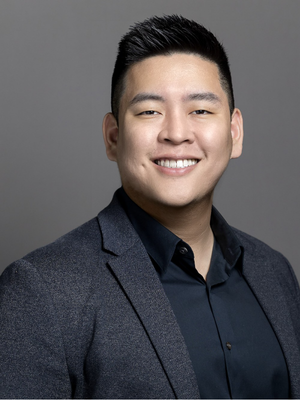
John Weng, PhD, is the Principal of Bricolas, a boutique leadership advisory practice spanning executive coaching, team development, supervision, and mentor coaching, and serves as a Leadership Coach & Consultant with Judge Business School, Cambridge University. He holds a doctorate in Leadership Studies from the University of San Diego, where he has taught as adjunct faculty, and is an ICF Professional Certified Coach (PCC) with the Advanced Certification in Team Coaching (ACTC). Certified by the A.K. Rice Institute, he draws on group relations and systems psychodynamics to help leaders, and the practitioners who develop them, be at their best.
Our Conference Model
Our conference operates on a community model where all participants—whether presenting or attending—register (at the published rates) for the event. As a nonprofit membership organization, this approach allows us to keep costs reasonable while creating a space where everyone contributes to and benefits from our collective knowledge. We don’t offer speaker fees or complimentary registrations because we see presentations as part of the collaborative exchange that makes our community valuable. All concurrent session presenters also participate in the broader conversation, learning from colleagues and connecting with peers. This model helps us sustain our programs while reinforcing that we’re all here together, sharing our work and growing as a community.